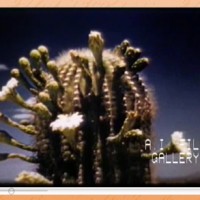
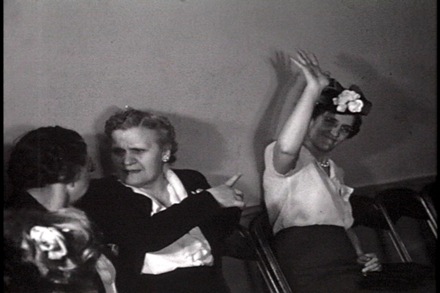
Cinecon 46 will show “nearly thirty rare silent and early sound feature films and as many short subjects from the nation’s leading film archives and Hollywood studio vaults, and Cinecon is dedicated to showcasing unusual films that are rarely given public screenings.” Note preliminary schedule here.
archives
Archive for May, 2010
Cinecon Classic Film Festival in Hollywood
posted by MIAN on May 25, 2010
Caroline Frick Named Eastman House Curator
posted by MIAN on May 25, 2010
Caroline Frick has been named the sixth curator of motion pictures at George House International Museum of Photography and Film, which was founded 61 years ago, and is the third largest film archive in the US. Frick has worked in film preservation at Warner Bros., the Library of Congress, and the National Archives in Washington, D.C.
She will oversee motion-picture preservation, the L. Jeffrey Selznick School of Film Preservation, and the motion-picture collections and programming for the Dryden Theatre and 360|365 George Eastman House Film Festival. She also will teach film studies at the University of Rochester.
Frick founded the Texas Archive of the Moving Image, and served as its executive director while teaching as an assistant professor with the University of Texas at Austin. She has programmed films for the American Movie Classics cable channel and is a former director of the board for the Association of Moving Image Archivists. She is working on a book, Saving Cinema, which is slated to appear from Oxford University Press. She writes and teaches about the evolution of moving-image archiving, cultural factors in historic preservation, and digital-media libraries.
George Eastman House International Museum of Photography and Film is located on the estate of photography and motion-picture pioneer and Kodak founder George Eastman. Founded in 1947, the archive houses 30,000 film titles and 4 million film-related publicity stills, posters, scores, scripts, and pre-cinema artifacts. Eastman House also holds the world’s largest collection of camera technology. The Eastman House’s L. Jeffrey Selznick School of Film Preservation is a leading venue of professional training in film preservation, restoration, and archiving. Annually George Eastman House restores more than 500 reels of film. The Eastman House also archives the collections of many renowned filmmakers, including Cecil B. DeMille, Spike Lee, Ken Burns, Kathryn Bigelow, and Martin Scorsese.
Revamping Canadian Archives
posted by MIAN on May 25, 2010
Daniel J. Caron, Librarian and Archivist of Canada, has launched a series of dialogues with the Canadian archival community about the role of Library and Archives Canada (LAC).
He is looking for input on what the national archive is doing right, wrong, well, and not well enough.
What new services should it offer?
What strategies should it be establishing now, in view of how great a revolution in archiving might be on the way?
How can it serve a greater range of sectors of Canadian society?
The archive has been collecting material since 1872, and works with many partner institutions across the nation, in all media. But it increasingly is eager to improve digital storage, according to Caron. That is in keeping with legislation adopted in 2004 when the National Archives of Canada and the National Library of Canada formally merged as Library and Archives Canada.
The merged institution aims to improve such common functions as preservation, IT, web sites, federated search mechanisms, and reference services. The new institution’s mandate includes published and unpublished material, both public and private; it also takes in textual, visual, and sound media, and analogue and digital formats. While emphasizing the acquisition of digital archives, the service still maintain its legacy of analogue media, Caron said.
However, Caron has made clear that the new service will emphasize the acquisition of digital archives, “while still respecting its rich legacy of analogue media from its two predecessor institutions,” said Cook.
These being modern times, the agency is trying to do all this with tight budgets.
Responsibility for collecting initial input on archival reforms fell to Terry Cook, a senior figure in Canadian archiving circles who spent over two decades at the National Archives of Canada, and is credited with revolutionizing archival practices there. Now head of Clio Consulting, and an associate professor of history at the archival-studies program at the University of Manitoba, he has completed that process, and handed over the submissions for the Library and Archives Canada, which will plan meetings with interested parties. “In general,” said Cook, “the response was good – well over 200 pages single spaced when compiled – from 93 respondents, and with lots of meaty suggestions and sound advice.”
He added: “The need for a strong national documentation framework or strategy is seen, in all media, and much better public services, including better finding aids online, better for contextual substance and better for navigating and searching functions.”
Among their concerns is to have continued and improved access to originals as well as digital surrogates.
Other consultants have been reaching out to librarians, professional historians, and genealogists. All this research is being done in keeping with legislation adopted in 2004, the Library and Archives of Canada Act (2004) when the National Archives of Canada and the National Library of Canada formally merged as Library and Archives Canada.
New US Archivist
posted by MIAN on May 25, 2010
In November, David S. Ferriero was sworn in as the tenth Archivist of the United States, the first librarian to hold the position. The librarian and library administrator was previously the director of the New York Public Library where he worked after serving as University Librarian and vice provost for library affairs at Duke University. Earlier in his career, he spent 31 years as a librarian at Massachusetts Institute of Technology.
The US Archivist is charged with managing the National Archives and Records Administration, which holds some 10 billion items. Ferriero was appointed as a successor to Allen Weinstein, who resigned in December on health grounds. At the New York library, he helped integrate the four research libraries and 87 branch libraries into one huge organization. Among his roles was to develop the library’s strategy for storing digital documents and images.